What is a Digital Library?
First, jokingly, I hope it's not this:
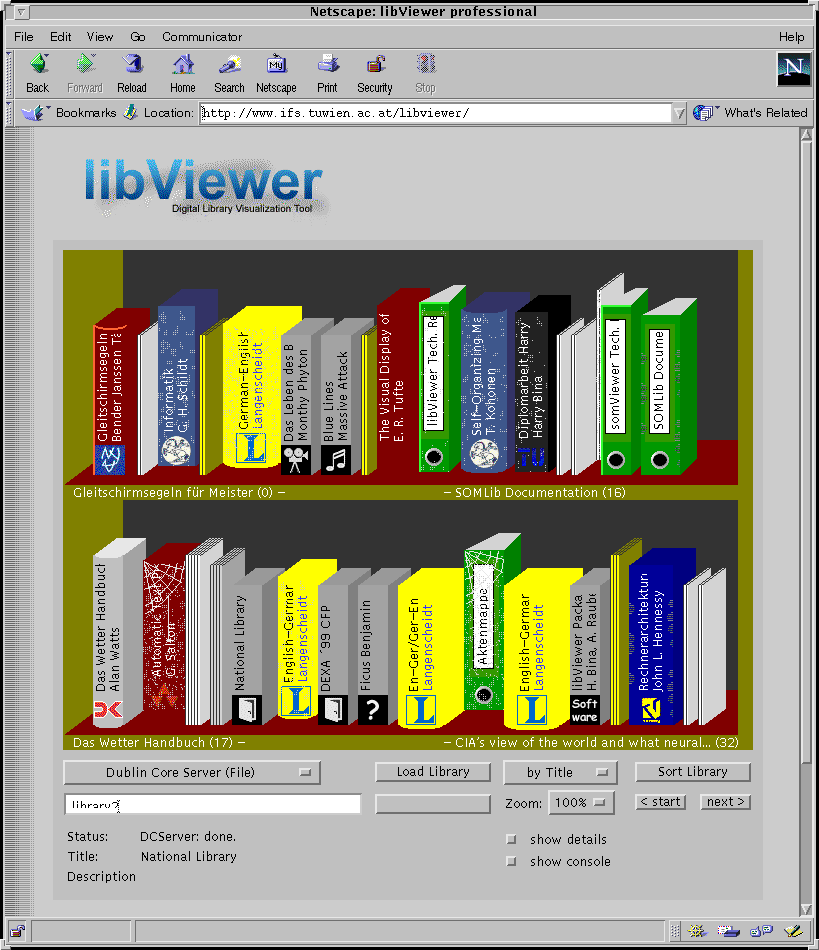
I think there are three salient points to describing a digital library, here they are, in a particular order:
- A digital library is user-centered, as all "good" libraries are. No matter the content of the collection, or the diversity of the users of the library, good libraries are always user-centered, putting their needs first and foremost in all decisions. Simply because a digital library describes, shares, and stores its information resources digitally does not mean that the needs of users of those materials simply melt away. On the contrary, digital libraries presume greater access to the library's resources by their very nature, increasing the user base, and presumably, their needs. Furthermore, the digital nature of the content itself allows librarians to better evaluate and meet those needs, while conforming to our professional ethical standards for privacy. These needs can be met through content itself, but also in its description (through metadata) and through the presentation of the content in whatever digital format the patron desires. If a physical copy is needed, than one can be made on-demand, pursuant to applicable copyright and intellectual property laws. I'll talk more about this in my third point.
- A digital library is still a library, but its collection happens to be in a different (read: digital) format. Books do not a library make, for they do not organize themselves into an easy to use shelflisting, nor do they generate metadata about themselves - librarians, and our fellow information professionals, make a library. Of course, content is essential to a library, but the content of a digital library is not physical - it is digital. As Ms. Kresh says in The Whole Digital Library Handbook, the majority of "resources are available in machine-readable format ... accessible by means of computers. The digital content may be locally held or accessed remotely via computer networks." This, then, is the distinction: the majority of "original" content in a digital library is accessible solely through a computer terminal. A traditional library's original content is accessible solely through a physical medium (books, CD's, video tape, and film).
- A digital library is fully digital. The metadata (catalog records), periodicals and indices, books, music, and video are all digital. Having digital content with physical catalog records is counter-intuitive. In order for a digital library to function, all its resources and services must be digital. However, as I mentioned previously, one can print out a physical item (item as defined in FRBR). The original object, or information container (manifestation) must be digital in nature.
Ok, so I am just a wee lad in digital libraries - all you experts out there, how did I do? I would love to have your input in the comments!

I am no expert on digital libraries however; I am pleased to see that this entry posted! Nice work, fancy pants. :)
ReplyDelete