Tuesday, June 30, 2009

St. Emilion

Friends, if you live in Fort Worth, please allow me to recommend what might be the perfect restaurant to you: St. Emilion.

They serve French food. No, it’s not like you are thinking - the food they serve is great, but it’s not stuffy at all. The food, as I said is wonderful, with a fixed menu, as well as a menu that changes each night, featuring new or different dishes every time. Everything the serve is perfect - nothing more needs to be done to these dishes.

Also, they have some of the best waitstaff we have ever encountered. Friendly, knowledgeable, passionate about the food, but just so darn friendly that you can’t help having a good time. So, if you have an occasion to celebrate soon, and you find yourself in Fort Worth, allow me to recommend St. Emilion!

- Jason Dean

Monday, June 29, 2009

Authority Records

Allow me to share with you one of the many unknown challenges of the librarian/cataloger in today’s library.

On Thursday, I was helping the director of the Amon Carter Museum Library catalog a new exhibition titled The Last Days of W. It was an odd work, printed on newsprint, without a real cover. That means the book conservation volunteer had to make a Phase Box for it, to protect the newsprint from light and from accidental damage.

The primary interface for cataloging in an OCLC client library is a program called Connexion. It allows libraries to look at the bibliographic MARC record and add, edit, or delete information from the local bibliographic record. After we found the record for the book, we loaded it into Connexion and started editing the record.

The record itself was not terribly well done, and needed some alterations to better describe the work. In so doing, we needed to work with the subject fields in the record. The subject fields are controlled by Authority Files. Since we were in Connexion, we could simply do a search for one of the subjects of the book: George Bush, the former president. Here is what the search interface returned:

010  no 95049848
040  TxDa ǂb eng ǂc TxDa ǂd DLC ǂd OCoLC ǂd DGPO ǂd P ǂd DLC ǂd NNU
1001 Bush, George W. ǂq (George Walker), ǂd 1946-
4001 Bush, George, ǂd 1946-
4001 Bush, Geo, ǂd 1946-
4001 Bush, Dzhordzh Uoker, ǂd 1946-
4001 Bush, Dzh. U. ǂq (Dzhordzh Uoker), ǂd 1946-
4001 Bush, Dzh. ǂq (Dzhordzh), ǂc mladshiĭ, ǂd 1946-
4001 Bush, ǂc mladshiĭ, ǂd 1946-
4001 Bushi, Qiaozhi W., ǂd 1946-
4001 Bush, Zhorzh, ǂd 1946-
4001 Arbusto, Jorge W., ǂd 1946-
4001 Bush, Xhorxh W., ǂd 1946-
5101 Texas. ǂb Governor (1995-2000 : Bush)
5101 United States. ǂb President (2001-2009 : Bush)
670  WW in American politics, 1995-96: ǂb p. 2536 (Bush, George W., Gov, Tex; b. 1948)
670  1995 inauguration, 1995: ǂb p. 7 (George Walker Bush, Governor of Texas)
670  The father's son, 1998: ǂb t.p. (George W. Bush, Jr.) p. 1, etc. (Geo; b. in 1946)
670  Academic Amer. encyc. ǂb (under father: George, b. 1946)
670  Encyc. Amer. ǂb (under father: George; b. 1946)
670  Bush Web site, Dec. 22, 1999 ǂb (George W. Bush; b. July 6, 1946, New Haven, Conn.)
670  Washington Post, 12-14-00 ǂb (Elected the 43rd President of the United States)
670  His Principles for a bipartisan patients' bill of rights, 2001: ǂb t.p. (communication from the President of the United States) p. 2 (George Bush)
670  Biznes s SShA, 2002: ǂb p. 7 (Dzhordzh Uoker Bush; Dzh. U. Bush; Dzh. Busha--mladshego; 43rd President of the United States; elected Nov. 2000)
670  Yong wang zhi qian, 2001: ǂb t.p. (George W. Bush; Qiaozhi W. Bushe)
670  Amerikaga tashrif, 2002: ǂb on leaf preceding t.p. (Zhorzh Bush; Dzhordzh Bush)
670  Krushenie Saddamovskogo Iraka i reakt︠s︡ii︠a︡ stran Azii, 2003: ǂb p. 1 (Bush--mladshego)
670  Filartiga, J. La increíble historia de Jorge W. Arbusto, 2001?
670  www.president.al/shqip/info ǂb (Presidentin amerikan Xhorxh W. Bush)

Now you see why we need those authority records - so that each person, etc. in the subject and author fields are named consistently. The correct name in a subject heading for the former president, is
1001 Bush, George W. ǂq (George Walker), ǂd 1946-
As the 100 field is for a personal name, and the date of birth matches that of the George Bush we were looking for.

Just to put this in perspective, this was but one step in the cataloging process - so you see why it takes so long to catalog books!

- Jason Dean

Friday, June 26, 2009

Music Recommendation For Your Weekend

Steadfast reader, please watch this video:


If you are impressed (as Jen and I were when we first head this song live), then you should check out the music of Andrew Bird, and if you are so inclined, read this fascinating article about him:

Andrew Bird Discovers His Inner Operatic Folkie, By Jonathan Mahler

And have a great weekend!

- Jason Dean

Authors supporting their local libraries

I know I have said a fair amount about the importance of libraries in these tough economic times, but what is being done to change that? Well, a wonderful example can be found here:
A Literary Legend Fights for a Local Library, by Jennifer Steinhauer
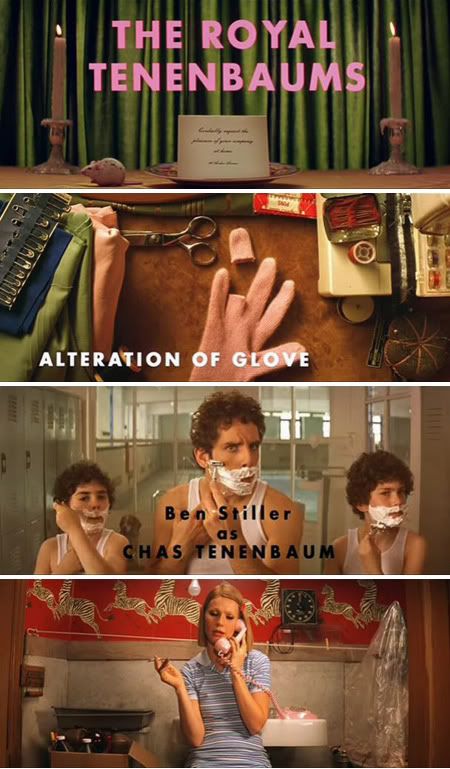
Ray Bradbury is actively working to support his local library (which seems like a cool mid-century building from what I can tell). Also, Ray Bradbury’s house looks like a set out of The Royal Tenenbaums. Interesting.

Have a great weekend - I’ll be writing a few posts for next week over the weekend - one about cataloging problems with names. Check back next week, you might just enjoy yourself!

- Jason Dean

Thursday, June 25, 2009

Why Read Biographies?

For those of you all that I have spoken to personally, you know that some of my favorite books are biographies. I love reading good biographies, but I was really never good at giving a good description as to why. However, I just finished reading this blog post that does a great job, and I wanted to share it with you:
http://ricklibrarian.blogspot.com/2009/06/reasons-to-read-biography.html

- Jason Dean

Wednesday, June 24, 2009

More library funding cuts news

As I have discussed before, it is so important to at least maintain the budgets of libraries. Today, I read the most drastic budget cuts so far, and I invite you to visit this link and let your voice be heard:
http://www.columbuslibrary.org/save_our_library

- Jason Dean

Tuesday, June 23, 2009

Magazines

There are three magazines I subscribed to over the past year: The New Yorker, Texas Monthly, and Monocle. Reading the New Yorker and Texas Monthly have been very rewarding to me, and I consider the magazines worth subscribing to. Monocle is a different matter.

Monocle is a very well designed, wonderfully illustrated magazine. What is it about? I can’t tell you. Sometimes it’s about great places to live, other times trends in business, or developing cities. There’s a manga magazine attached in the back (which I never read) but when I saw it on the newsstand, I thought it was really cool, so I would subscribe.

A yearly subscription to Monocle is $130 per year! You get all of the issues of the magazine (10), and access to their website, which they say has lots of added content, but it’s really just fluff - much like the magazine. Many of the articles both on line and in the magazine are too short, and do not explore any given topic fully. The design and the photography try to give the articles more gravitas, but when there’s really nothing there to begin with, they can’t add much. Unlike the New Yorker, no themes get explored in a meaningful way. It’s more about how you can drop your very shallow knowledge from the article into party conversation. The content of the magazine certainly does not justify the cost.

Also, I had problems with the website itself - several times I had to contact customer service to get them to assist me. Ridiculous for 130/year. So basically, you are just subscribing to it because of the good design. Not because of the articles, and not because of the website. If it was 40 dollars, I might re subscribe, but 130 is ludicrous.

So, if you want people to think you are in the know, but not really, then subscribe to Monocle today. If you want a good magazine that thoughtfully explores issues, then subscribe to The New Yorker.

- Jason Dean

Monday, June 22, 2009

Paper Archives Thoughts

I am reading today for the second of my two summer classes at Syracuse. In reading, I came across an article that you, good reader, might enjoy. I appeared in The New Yorker in 2002, and is by the famous author and thinker Malcolm Gladwell. It’s about paper, ad why we will never live in a paperless society. So without further ado, here is The Social Life Of Paper: Looking for method in the mess. By Malcolm Gladwell

- Jason Dean

Friday, June 19, 2009

Lessons from European Libraries Thoughts

I hope you enjoyed the video yesterday. I felt that Dr. Nicholson had some very interesting things to say, both about European and American libraries.

First, he talked about making libraries community spaces. I see some libraries across the US embracing this - making their spaces places where people want to be social, network, and maybe do a bit of learning as well. In this economy, I think having a place like that is incredibly helpful. Making the actual library building open and welcoming goes a long way in this. For example, when Jen and I were in Seattle, we went by the library there. Wonderful, open, welcoming space - and it is full of people!

Second, he pointed out the key difference between American and European libraries - that in Europe, you have to pay to be a member of a library. Initially, I balked at this idea - information should be free for those that want it. But, as Dr. Nicholson points out, there are some benefits to the pay system. First, authors (because of the copyright structure) receive a royalty every time their book is checked out of the library. This helps to preserve the value of the work at booksellers. Also, this allows the library to be much more “meshed” with the expectations and desires of patrons - because it does not have to be all things to all people. American libraries cannot tailor themselves as closely to their patrons, while European libraries must listen intently for that their patrons want - otherwise the patrons won’t renew their memberships.

So what does a paid membership library look like. Well, shockingly, there is less space for books. Yes, there are still plenty of books, but the amount of physical space they take up in the libraries is reduced. There are far more computers, games, videos, and theaters. Of course, this could be different depending on their patron base - but whatever it might look like, it would be directly responsive to the wants, needs and preference of the patrons.

And that, I think is the lesson that American libraries should take - you need to tailor your library better to what your patrons need. That, in turn, will grow membership, and continue to improve your library.

Thursday, June 18, 2009

Lessons from European Libraries

As you all know, Thursdays are my day to work in the Amon Carter Museum Library, and so I wanted to share a library tidbit with you all. This video has been sitting in my blog idea file for a while, and I have been trying to write about it. I will share my opinions about the video tomorrow, but today the video will have to suffice. This video was made by Dr. Scott Nicholson, the MSLIS program directory at Syracuse. I found it to be very interesting, and I hope you do too!


- Jason Dean

Tuesday, June 16, 2009

Liberty?

Universities should be places for challenging yourself. Broadening your horizons. You reaffirm those things which are important to you, while discovering new ways of doing things - new ways of looking at the world. It should be a place where many viewpoints are encouraged and respected - not a place where a viewpoint is forced down your throat.

Liberty University is one of the most conservative institutions of higher learning in the United States. I firmly believe that this is important - so students with a very conservative viewpoint can go to an institution of higher learning where they feel comfortable. However, it should also be a safe place for those students to question their beliefs and to explore new ways of thinking about things.

So, to be honest, I was shocked when I read the news that Liberty University kicked the College Democrats Club off the campus. However, the College Republicans Club remains. If students want to find out what the Democrats are about, why should Liberty prevent them from doing so? They are not engaging in any illegal or immoral activities, but simply supporting a political party that they see as meshing with their own moral views. Liberty should not make those decisions for the students - the students should make those decisions for themselves.

Monday, June 15, 2009

The $125,000 Teacher

If you read much about education, one of the cries of the critics that we frequently hear is that we should pay our teachers better. As a former educator myself, I would agree with this. On the whole, for the work they do, teachers are grossly under-compensated for their jobs - highly stressful, physically, mentally, and emotionally demanding. I think from the outside looking in, teaching looks easy, but if you want to do a good job, it's not easy at all.

So, I was excited to read, and to share with you, good reader, this article:
Next Test: Value of $125,000-a-Year Teachers
This school in New York City is paying its teachers $125,000 a year. Just look at the quality of applicants they had - brilliant people, and all of them are teachers of some sort. They were observed by the new school repeatedly, under normal teaching conditions. Excellent! Perhaps if we instituted elements of this process in the hiring of classroom teachers, we would generally have better teachers. All of them seem to be very enthusiastic about educating youth. I think it's wonderful, but all this does not come without a price. They will open with 5th grade, but with plans to expand as time goes on.

There are no assistant principals, no deans, no substitute teachers. The teachers will work longer hours, more days, and have 30 students per class. Also, the teachers can be fired at will. So, it's not all a bed of roses. However, I am very interested to see how this school performs against the other schools in NYC, as well as other urban schools in the US. Will the teachers be able to teach effectively with all these other responsibilities and concerns? We shall see.

- Jason Dean

Thursday, June 11, 2009

Fruit Classification System

In the spirit of classification systems I have created a personal fruit classification system that I may reference when compiling our grocery list.  There are 4 main categories each with a designated letter representing the said category.  Following the categories are a list of fruits and the letter(s) that relate them to the applicable category(s).
 
A -Fruits That My Body Likes
B -Fruits That My Body Does Not Like - shown by extreme itching of the mouth and/or painful stomach cramps
C -Fruits That I Like Consistently
D -Fruits That I Do Not Always Like
E -Fruits That Are Better in Fall/Winter
F -Fruits That Are Better in Spring/Summer
G -Fruits That Pair Easily With Other Fruits
H -Fruits That Bruise Easily (therefore, must be thoroughly checked)
 
Apples - ACDEH
Bananas - BH
Blackberries - ACDFG
Blueberries - ACFG
Cantaloupe - BFH
Cherries - ACFG
Grapes - ACG
Mango - AD
Oranges - ADF
Pears - ACEH
Pineapple - ACF
Raspberries - ADFG
Strawberries - ACG
Watermelon - BDF

- Jen Dean

Wednesday, June 10, 2009

Now, where does this go?

Traditionally, books are the main resource in a library's collection. Where I work, the Amon Carter Museum Library, where I work is considered a small library, but it has about 50,000 books, not to mention the library's archive and map holdings. As I am sure you realize, good reader, this provides a thorny problem for the librarian - how to classify and organize those books into some sort of logical order. Not only so you can find them on the shelf, but also so that the patron can browse books in a certain area and discover other works they might find interesting.

The argument as to how to classify and organize books in a library is as old as libraries themselves. The earliest libraries known, in the fertile crescent, had some form of library classification. As time moved on and the amount of information in libraries increased exponentially, two classification systems became widespread in the US: Dewey Decimal, and Library of Congress.

Most people are familiar with the Dewey Decimal System. For example, one of my favorite books, Master of the Senate, by Robert Caro, could have two call numbers :
973.923/092 (This would place the book in Social Sciences)
or
328.73/092 B 21 (This would place the book in History)
depending on if you use the exact call number that is in the Library of Congress record, and you would also have to determine if you wanted it in Social Sciences or History. Dewey Decimal is one of the oldest, and is also widely used. My school library used this classification, and it worked pretty well. Of course, you can see a problem developing - that this book would go into Social Sciences or History - but what if someone was looking for biographies - there is no "class" for that area. One large library that uses this system is the Seattle Public Library - one of the coolest main libraries in the country. This link will tell you all about their building - and notice the changeable Dewey numbers in the floor!

As I mentioned, the other widely used classification system is the Library of Congress Classification. As I have mentioned before, the Library of Congress (LoC) is the progenitor of all things library related in the US. So many libraries follow what the LoC does, simply because of the size, and the perceived quality of the work of the LoC. The Amon Carter Library uses the LoC system, and it works very well. Generally, I think, the LoC scheme is better at classifying than the Dewey system - and I am surprised at the number of libraries still using Dewey. To give you an example, let's look again at Master of the Senate in the LoC scheme:
E847 .C34 1982 vol. 3
Just one call number, and we can gather from that call number that the book falls into the History of America (E), Johnson's Administrations (847) That the last name of the author starts with a C, and that the original volume in this series was published in 1982, but this is the third volume in that series. Personally I prefer the LoC scheme, as it is much more descriptive and definite in its scheme.

By no means, though are Dewey and Library of Congress the only methods of book classification. Some bookstores have chosen, as a design experiment, to sort books by their spine colors. Neat looking, but a nightmare to browse or find any books! Also, an artist has combined the color idea with an actual classification system - great idea, but what happens when the covers with the call numbers on them are lost?

What got me thinking about all of this, was this article, in which a library system has decided to abandon Dewey for classification, but did not switch to LoC, but to another, self created WordThink classification system. The point I am trying to get across here, dear reader, is that even though the library world seems very traditional and set in its ways, it truly is dynamic and creative - just like the information we help to classify and organize.

- Jason Dean

Tuesday, June 9, 2009

Twitter

My good readers,

I hereby give you my word that I will never join Twitter, as I see very little point in it. It just seems to be the latest fad in social networking, one which I resolve not to fall into. This article confirms my suspicion:
http://news.bbc.co.uk/2/hi/technology/8089508.stm
If you are interested as to what I am doing, find me on Facebook!

- Jason Dean

Monday, June 8, 2009

WWDC, 2009

For all you Apple-using readers out there, today is WWDC, where apparently Apple will release Snow Leopard (new OS X), a new version of the iPhone, a new iPhone OS, and perhaps something else I am not as sure about.

Check out the live blog here:

http://live.gizmodo.com/

- Jason Dean

Thursday, June 4, 2009

The Orangemen

Just wanted to let you know that Syracuse has maintained it’s number three ranking for the best library school in the nation:
http://ischool.syr.edu/newsroom/news.aspx?recid=666

Pretty neat - go Orangemen!

- Jason Dean

Wednesday, June 3, 2009

The Kindle

Like many other Americans who love to read, I have been intrigued by Amazon’s electronic book reader, the Kindle. To be fair, I must admit I have never used one, only seen them in passing. However, the Kindle’s price ($359) makes me hesitant to run out and buy one just for the sake of trying it out. I’ve been browsing the internet to try and find a good review, and after reading several, I would like to share my thoughts.

First - I love books. For me, reading a book is both a visual, as well as a tactile experience. I love how the pages look and smell, the heft of the book in your hand, the noise of a page as you turn it. I also love to see them on our bookshelves - arranged neatly. I love the design of book covers, and the general graphic design of the book itself. So, to be fair, the idea of the Kindle is anathema to me.

Apparently, the Kindle works pretty well most of the time. It has trouble with the voice-reading option, and text occasionally does not parse properly. It’s fairly easy to read in the daytime, but has no backlight for nighttime reading. These are all things than can be solved by reading an actual, physical book.

But, for example, when Jen and I went overseas earlier this year it sure would have been nice to take our books (especially mine) over in a Kindle - much lighter and easier to carry. However, I am not clear if you can use it on an airplane or not.

As for me, I’ll pass on the Kindle. I do not think that books are going anywhere anytime soon.

- Jason Dean

Tuesday, June 2, 2009

The Tonight Show

Last night, like many Americans, Jen and I tuned into The Tonight Show, with its new host, Conan O’Brien. To me, it felt like it was a momentous occasion for many Americans, because of the importance of television. It was great to see Conan in the place he had been reaching for ever since he was a kid watching TV with his dad - host of the Tonight Show.

I know he has only been hosting for one night - but I feel Conan will be (and we saw glimpses of this last night) a better host than Jay Leno. I appreciate Conan’s willingness to push the envelope a bit, as he showed some last night. Leno was very middle of the road - one of the reasons why I preferred Letterman over Leno. Pushing the “allowable limits” of comedy makes me appreciate that comedy even more. I loved the skits that were on Conan last night, but I would like to see just 1-2 each night. Also, Conan did a good job with his first night opening monologue. Not at all the train wreck that is Jimmy Fallon. I look forward to seeing what Conan will do in his new job.

Speaking of Letterman, I watched his show from last night, and it felt antiquated. Perhaps it’s the set, or that Bill Cosby was on (I wish he was in better health - his stand up was just mediocre), or that Letterman wore an outfit that made him look like he was going to go yachting after the show - whatever it was, it just felt stail. I was surprised, and a bit disappointed, that Letterman didn’t have a better show than he did last night - that he didn’t really try to compete with Conan. Of course, that’s part of Letterman’s schtick as the underdog of late night, but still - he should have put some effort in it.

All in all, it was nice to see a late night debut that went smoothly (unlike Jimmy Fallon) now I just have to choose between Letterman and Conan - and it might be easy, but I imagine it will be pretty difficult.

- Jason Dean

Monday, June 1, 2009

Digitization and Libraries

Recently, I read a Wall Street Journal article online about one aspect of one of the major trends in Library Science today: digitization of manuscripts. There is a wide-ranging debate about this topic in Library Science fields, and I will try to give you a brief description of the situation.

Much like any debate, there are two sides. On one side, you have the group of people that say that digitization of books, etc. in libraries is bad, and perhaps even illegal. It could be illegal because of the copyright laws involved, and how libraries control the digital copies of their work. Also, some people say that there is some inherent quality to researching in a more old-fashioned way - using indices, etc to get what you need from a text. Google recently ran into many of the anti-digitization arguments when it announced that it would pair with Stanford University and “publish” digitized works online. If you would like a nice summation of the anti-digitization arguments, click on through to this link.

On the other side of the debate are the proponents for digitization. These folks say that digitization will better preserve the materials in libraries, while reducing physical space of the collection. Especially important to digitization, and also what the WSJ article was about, was the digitization (scanning) of rare and fragile works in order to preserve them. I think this is the best use for scanning - to preserve books, etc. in a readable format - before they disappear altogether. We can preserve some great and important works for future generations - even when the work has a limited physical lifetime.

But, nothing will ever replace holding a fine book in your hand - not even Amazon’s Kindle.